This is the second part of a two-part series. You can read Part 1 here.
For hundreds of years, the places where we would usually go when we had a question or an uncertainty were institutions and authorities. These might be the church, the state, the press, reference books, or a wise person in our community. We had a certain amount of trust in them and the answers they gave us.
Some of this was necessary because there were not many other sources of information. Imagine you went to the doctor in the early 1990s and the doctor prescribed antibiotics for your child’s strep throat. What other option for information or treatment did you have? It would be impossible to Google alternative treatment options because Google didn’t exist. You couldn’t pull out your phone while you were waiting on the doctor because smartphones didn’t exist. You had the voice of experience and authority of the doctor to tell you what was best for your child. There were really no other options. Authorities could speak authoritatively because they were the only real source of information. Now, there are many competing sources of information, and many of them don’t line up with what the authority says is true. Who do we trust? Especially when what our intuition and “common sense” tells us conflicts with what the authority says is true?
Lack of trust in authorities is not a new phenomenon. Many historians point to the 1960s and 1970s as a time when the trust in the government decreased. Much of this was driven in secretive government programs during the Cold War and government coverups such as the Watergate scandal. People started doubting more and more of what their government said. This distrust has only been furthered by revelations by Wikileaks and others who showed that the United States government was illegally surveilling its own people using cell phone data. This surveillance was allegedly to protect the United States public from another terrorist attack like that on September 11th at the World Trade Center and the Pentagon, but even so, what little trust remained was further eroded.
Some of this distrust was also aimed toward other authorities such as those in the medical field and science. They may not have been the main targets, but they were certainly caught in the crossfire. During the 70s, 80s, and 90s, there was the rise of theories regarding whether the United States actually landed on the moon or whether it was all faked. Then, an idea that had been dormant for literally hundreds of years, the belief that the earth was flat, began to resurge. People who believed in a flat earth accused NASA and others in government of covering up the truth by faking pictures of a round earth that were allegedly taken by satellites or by astronauts. Other people believed that the contrails behind airliners were actually chemicals that the government was spreading to control the populace. If the government had lied and covered up other information, why wouldn’t they do the same here? Actual secrecy and coverups led to the accusation of even more secrecy and coverups.
The development of the Internet in the 90s and its rapid rise in the early 2000s only fueled the spread of ideas that were previously viewed as fringe. Before, you had to search out information about faking the moon landing, flat earth theories, or chemtrails, but now you could stumble onto them on Facebook, YouTube, or Reddit. Large groups of people built communities around their belief in these ideas and found meaning and purpose in telling other people about what they believed was true. It was, and still is, quite compelling.
If traditional authorities told you one thing and a passionate online community said something completely different, who should you trust? The authorities who have a history of secrecy, or the community who are willing to engage with you and tell you why you should believe them?
Who Can We Trust?
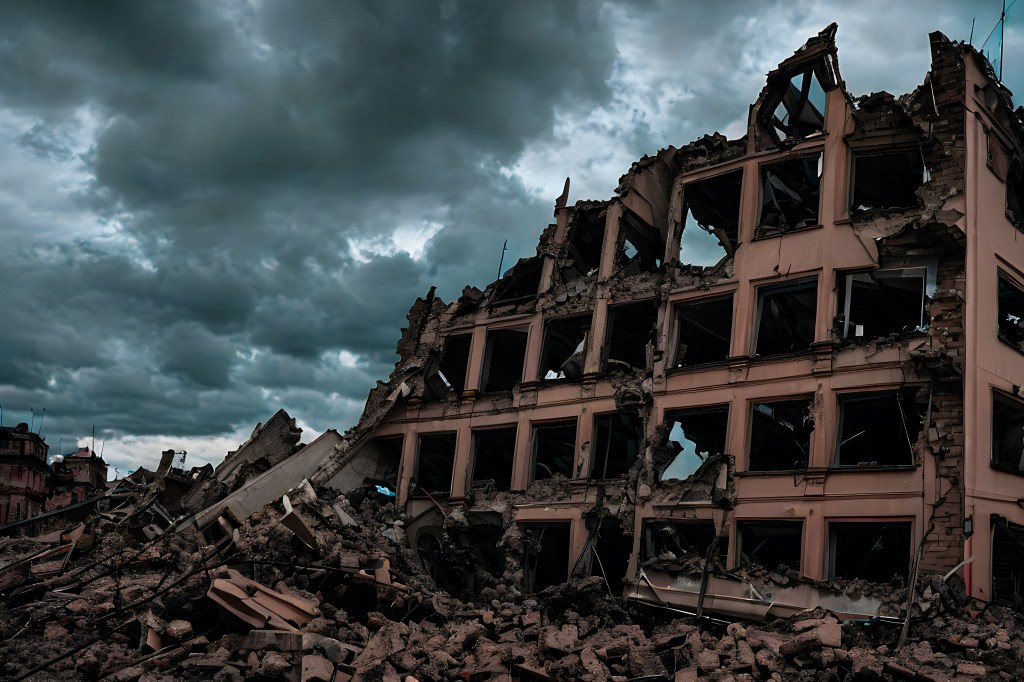
From the ashes of the last fifty years we are left with little that appears solid and reliable. The government and other traditional authorities have lost our trust. The overabundance of information led by the explosion of the Internet into our personal lives has expanded the quantity of information that we can access and the range of different opinions and ideas. Ideas that were considered fringe have displaced accepted ideas as the Internet incentivizes extreme and captivating content. This makes it increasingly difficult for us to sift accurate information from that which is biased or downright false. Adding to this, the increasing complexity of modern life makes it ever harder for laymen to understand and interpret what economists, medical professionals, scientists, and other specialists are saying.
All of these factors combine to form a climate of distrust in nearly everyone and everything. If we can’t trust anyone, what do we do? Should we do our own research and find truth that way? Doing our own research may seem like our salvation—a piece of flotsam upon which we can save ourselves from the wreckage of modern life—but often what ends up happening is that we simply transfer our trust from one authority to another. How can we know that our new authorities are free from bias and their information is also accurate? We can do our best to find what is true, but our limited knowledge of what we are researching will only get us so far. At a certain point we have to go forward in faith and trust that what we are reading or watching is true. If it is not, we have no way of determining if it is false.
The issues we are facing are not going away anytime soon. If anything, it will be even harder to discern truth from fiction as the Internet increases its influence, as AI-generated content becomes more prevalent and as people continue to lose trust in traditional authorities. As Christians who care about truth, we must exert ourselves to separate truth from falsehood, to see clearly through the fog of modern life. We have to trust someone, who can we trust?
I might continue this series, but at this point I haven’t written another post. Let me know if you’d like this series to continue.


 Invisible Things
Leave a reply to Kathy Rhodes Cancel reply