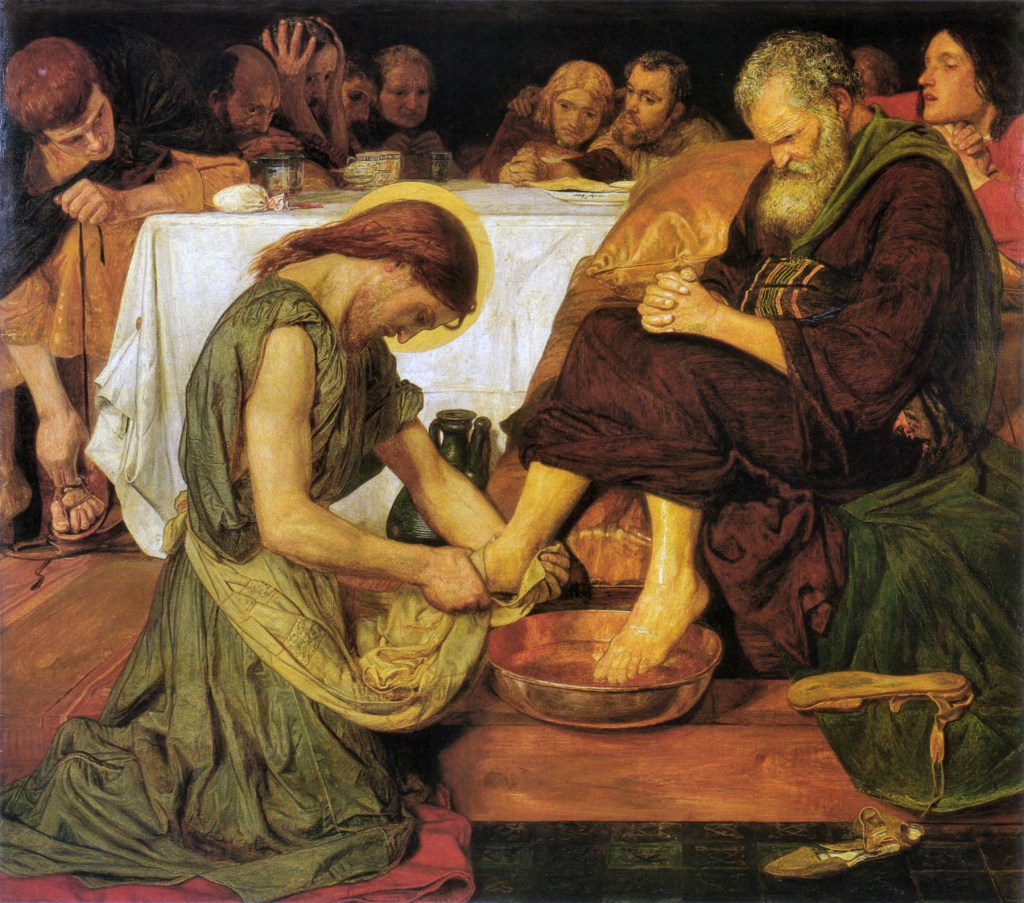
Anabaptist culture places a lot of value on humility. From little on up, our parents are careful to not praise us too much, lest our heads expand beyond their recommended proportions. When we grow up, we look askance at those who seem to place themselves above others or who draw attention to themselves by their actions or apparel. Now that I have children of my own, I do my best to train them to not jump to the front of the line to our church’s “candy man” and to share their toys with others. These habits may not seem related to humility, but in putting others before themselves, I hope they will learn that they are a small part of the community, not the center.
We also expect our leaders to exemplify humility in all areas of life. There is also a mostly unspoken expectation for them to accept their position reluctantly, not to quickly raise their hand and say, “Sure, I’ll do it.” An overeagerness could reveal a desire for personal advancement that doesn’t seem healthy.
There is much that is good about our focus on humility. In our communities, there is less focus on the individual and more on the body of Christ, which is clearly supported by the Scriptures. However, a focus on this virtue can manifest itself in different and sometimes harmful ways depending on what people pursuing the virtue believe it means. I believe that not only do we not all agree on what humility is, but that when our view of it is unbalanced it emphasizes a small part of what it means to be humble at the expense of a more complete view of humility.
Thinking Less of Myself
When I was younger, I felt that to be humble I needed to think less of myself to push back on my natural tendency for pride. If I felt like I was good at something, I needed to corral that feeling and either ignore it or tell myself that I’m not as good as I think I am. I believed that what it meant to be humble was to hang my head and say; “I’m unworthy.”
This view of humility is largely a reaction to pride, which is not all bad. Pride is the origin of many sins, so we should do all we can to root it out of our souls. However, in its single-minded aim to expunge pride, this view of humility tramples over our worth as a child of God. Yes, we should be like the publican in the temple and cry out for mercy, but God views us as valuable enough that He sent His Son to die for us. Moreover, in the focus on thinking less of ourselves, we often end up focusing perhaps even more on ourselves and becoming self-absorbed in our unworthiness. A low view of ourselves can also be a hindrance to us being willing to accept responsibility in the home, church, or business because we either think we aren’t able to do it, or we think it is prideful to step forward.
Thinking less of myself aims to address pride, but I believe misses the mark of what true humility is.
Thinking More of Others Than Myself
A decade or more ago, I remember hearing that humility is not thinking less of myself, but thinking more of others. This phrase echoes Philippians 2:3 “Do nothing from selfish ambition or conceit, but in humility count others more significant than yourselves.”
This is certainly a better view of what true humility is than thinking less of myself. In Scripture, we are told that we should do unto others as we would have them do to us (Matt 7:12) and to submit to others (Eph 5:21). In the Gospels, Jesus spoke about how His kingdom would be upside-down—that the structure of the Kingdom would be the opposite of how earthly kingdoms are structured. When his disciples were arguing about who would be greatest, Jesus told them, “If anyone would be first, he must be last of all and servant of all.” (Mark 9:35).
Jesus also spoke about humility in His parable of the wedding feast. In the parable, Jesus encouraged His listeners to go to the lowest place at the table so that the host might come and ask them to move to a place of higher honor. This is preferable to sitting at a place of highest honor and then being ashamed when the host asks them to move to a place of lowest honor to make room for someone more important. Jesus then ends His parable with “For everyone who exalts himself will be humbled, and he who humbles himself will be exalted.” (Luke 14:11)
A humble person is portrayed in these verses as one who counts others as more important than himself, as one who submits to others, as one who serves, and as one who doesn’t seek to exalt himself. The humble person empties himself and learns from the gentle and lowly example of Christ (Matt 11:29).
When done properly, thinking more of others than myself is good and Scriptural. However, we can easily allow it to become unbalanced until humility becomes an excuse to keep myself well within my comfort zone and out of areas of responsibility.
Often we focus on those actions that appear to be humble to others. It is good and right to not barge to the front of the potluck line, but might there sometimes be an aspect of sacrifice in stepping up and going through when no one else seems willing to do so? What is humble and what is not might not always be clear, and could sometimes look different in different situations.
Humility primarily applies not just to our actions, but to our hearts, thoughts, and words.
The real test of humility isn’t determining who goes through the meal line last, but in interacting charitably and humbly with others when we have differing viewpoints. People who wouldn’t dare be seen going first through the meal line might only a few minutes later tear down a brother or sister while talking around mouthfuls of mashed potatoes and limas. Are we the Pharisee telling God how thankful he is that he better than other men, or are we the publican? (Luke 18:10-14) Humility primarily applies not just to our actions, but to our hearts, thoughts, and words.
Thinking About Myself as God Does
Recently I heard a minister tell his congregation that true humility is seeing ourselves as God sees us. Could this model of humility be the more complete view that helps guard against the imbalances of the other views?
The minister’s statement raises the question: “How does God view us?” As the focal point of Creation, mankind was made in the image of God and as such has nearly infinite value. God loved us so much that He sent the Son to earth as a man to die and redeem us from our sins. This truth pushes back against the model of humility that causes of to think less of ourselves or see ourselves as not worthy.
God gave us work and responsibilities during our lives on earth. There is nothing prideful about embracing this truth and carrying out our responsibilities to the best of our abilities. If there is a need or a gap that should be filled in our communities, as creations of God we have been tasked with seeing that need and serving others by filling it. Service can sometimes result in leadership or a more visible position, but we should not shy away from the responsibility for that reason.
When thinking about our value in God’s eyes, we must not forget that we are not the only ones God loves. Everyone we interact with, yes, even that brother at church that you can barely stand, is loved and valued by God. True humility is not complete without seeing others as God sees them.
We are also fallen sinners in need of forgiveness and redemption. This view provides a balancing pressure that should provide humility both in how we view ourselves and how we view our own opinions and viewpoints. Not only should we remember our limited perspective when we interact with others, but we should also remember it means we don’t always have all the facts and that our take on things is likely not quite right. A right view of our fallenness should make us pause and consider our motivations before we accept responsibility.
We are both a valued treasure and fallen sinners in God’s eyes. How should that affect our view of ourselves and others? Instead of focusing on ourselves either as unworthy or too worthy, or judging our humility on how other people view us, perhaps we should focus on God’s view of ourselves and others and His Son’s example of what humble service looks like. I’m sure we won’t always get it right, but maybe, just maybe, we can inch a bit closer to where we should be.


 Invisible Things
Leave a comment